Rubber bearing comes in various forms, including elastomer bearings, neoprene bearings, and lead rubber bearings, each tailored to specific engineering requirements. Elastomer bearings, composed of high-quality rubber compounds, offer flexibility and elasticity, making them ideal for absorbing dynamic loads on structures such as bridges and buildings. Neoprene bearings are known for their oil resistance, weather resistance, and ozone resistance, making them suitable for environments expected to be exposed to harsh conditions. Lead rubber bearing incorporate a lead core within the rubber layers, excelling in damping vibrations and isolating structures from seismic events.
The material properties of rubber, including its elasticity, compliance, and damping characteristics, significantly influence the performance of rubber bearings. Rubber exhibits excellent elasticity, allowing it to deform under load and return to its original shape, thus providing resistance to repetitive stresses. Furthermore, its inherent damping properties enable rubber bearing to dissipate energy and reduce vibrations, thereby enhancing stability and durability in dynamic environments.
Flexible engineering considerations
Load Capacity Analysis
Engineering considerations for the elasticity of rubber bearing require a detailed analysis of their load capacity. This includes assessing how the bearing responds to static and dynamic loads, understanding its stiffness characteristics, and determining its ability to withstand varying degrees of force. Static load analysis involves evaluating how the bearing supports the weight of a structure or equipment over time, ensuring they maintain stability and structural integrity under constant pressure. Dynamic load analysis, on the other hand, focuses on how the bearing handles sudden or fluctuating loads, such as those caused by vibration or seismic events. Engineers must consider factors such as the frequency, magnitude, and duration of dynamic loads to ensure the bearing effectively absorbs and dissipates energy without compromising its elasticity. Furthermore, understanding the stiffness of rubber bearings is crucial for predicting their deformation behavior under different load conditions, enabling engineers to optimize designs for maximum elasticity and service life.
Vertical Load Design
The engineering considerations of rubber bearing elasticity extend to the design of vertical loads, a critical aspect ensuring their performance and lifespan. When designing for vertical loads, engineers must assess the compressive strength of the rubber material, which determines its ability to withstand and support vertical forces applied to a structure or equipment. This involves selecting a rubber compound with appropriate stiffness and elasticity to resist deformation and maintain structural integrity under applied loads. Furthermore, engineers need to analyze the bearing's load-deflection characteristics to understand how the bearing's stiffness changes under compression. This allows for the prediction of bearing behavior under different loads and ensures that the design can adapt to varying load conditions without compromising performance.
Shear Load Distribution
Shear load distribution refers to the distribution and transmission of horizontal forces on the surface of a rubber bearing when subjected to lateral movement or vibration. Engineers must carefully evaluate the shear modulus of the rubber material, which determines its resistance to shear deformation and its ability to maintain stability under lateral loads. Furthermore, the interfacial friction between rubber bearings—adjacent surfaces—plays a crucial role in shear load distribution, affecting load transfer efficiency and the overall stability of the structure or equipment. By optimizing design parameters related to shear load distribution, such as material selection, surface texture, and interfacial conditions, engineers can enhance the resilience of rubber bearings, ensuring reliable support and stability in dynamic environments.
Enhancing Vibration Isolation
Enhancing the vibration isolation effect of rubber bearing involves multiple approaches, starting with a comprehensive understanding of vibration frequencies. Vibration frequency represents the rate at which a structure or machine vibrates in response to external forces, covering a wide range of frequencies. Engineers carefully examine the resonant frequency, the most effective natural frequency of the system's vibration, to identify potential resonance problems that could amplify vibrations and lead to structural damage. By identifying the system's vibration spectrum, engineers can target isolation for specific frequency ranges, focusing particularly on high-frequency vibrations that pose significant challenges.
Isolating high-frequency vibrations is crucial because they can cause excessive wear, fatigue, and noise in machinery and structures. These vibrations are often caused by rotating machinery, impact loads, or environmental factors, and if left unaddressed, can lead to shortened equipment life and increased maintenance costs. Therefore, engineers must develop effective strategies for isolating and suppressing high-frequency vibrations to protect equipment and personnel from potential harm.
To address high-frequency vibration problems, engineers employ various isolation techniques tailored to specific frequency ranges. Tuned mass dampers (TMDs) are an effective method, mitigating vibrations at specific resonant frequencies by introducing an auxiliary mass-spring-damper system tuned to counteract the vibrations. Furthermore, frequency-dependent damping mechanisms are employed to selectively attenuate vibrations within the target frequency band, thereby further improving isolation efficiency. These techniques are complemented by the use of a base isolation system that separates the structure or machinery from its foundation to minimize vibration propagation.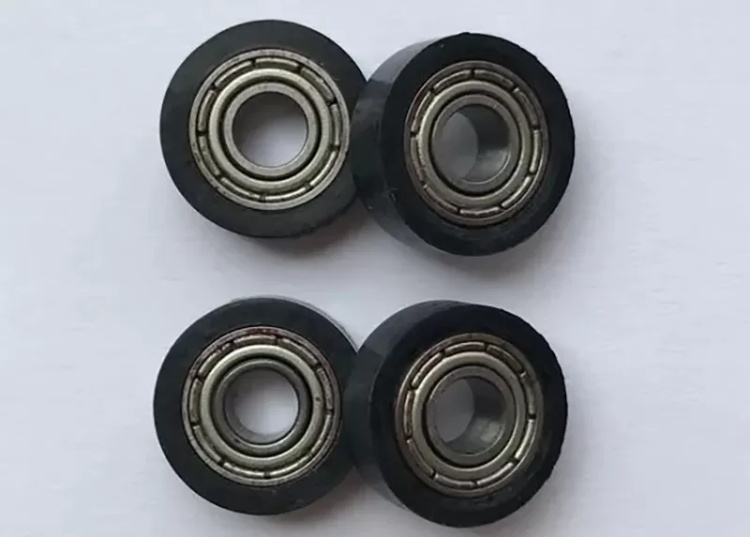
Damping characteristics of rubber bearing
Rubber Damping Mechanisms
Understanding the damping mechanisms of rubber is crucial for engineers to design flexible and efficient bearing systems. Rubber exhibits two main damping mechanisms: hysteresis damping and viscoelastic damping. Hysteresis damping occurs when rubber undergoes cyclic deformation such as compression or shearing, resulting in energy loss due to internal friction within the material. This mechanism is particularly effective in dissipating energy during repeated loading cycles, contributing to improved elasticity in rubber bearings. Viscoelastic damping, on the other hand, involves the conversion of mechanical energy into heat as the rubber deforms and relaxes over time. This damping mechanism is influenced by factors such as temperature, strain rate, and load frequency, making it applicable to damped vibrations under various operating conditions.
The Importance of Damping in Vibration Reduction
The importance of damping in rubber bearing lies in its crucial role in vibration reduction and protecting structures and machinery from the harmful effects of sudden shocks and vibrations. Damping helps dissipate the energy generated by dynamic loads, thereby reducing the amplitude and duration of vibrations transmitted through the system. This is especially important in environments where machinery operates continuously or structures are frequently subjected to external disturbances, such as earthquakes or heavy machinery operations. By effectively damping vibrations, rubber bearings can prevent resonance effects, structural damage, and fatigue failure, ensuring the safety, stability, and longevity of engineering systems. Furthermore, damping characteristics contribute to improved comfort for building occupants and reduced noise levels from machinery. Engineers prioritize optimizing the damping characteristics of rubber bearing to enhance their vibration reduction capabilities, thereby improving overall resilience and performance under dynamic operating conditions.
Optimizing the Damping Ratio
Optimizing the damping ratio is a crucial aspect of designing rubber bearings for effective vibration damping and reduction. The damping ratio, typically expressed as the ratio of actual damping to critical damping, determines the system's energy dissipation and resistance to oscillations. Engineers aim to achieve a balance between the stiffness and damping of rubber bearings to achieve optimal performance in dynamic environments. A higher damping ratio indicates better energy dissipation and damping effectiveness, which helps prevent resonance and reduces the risk of structural damage. However, an excessively high damping ratio can lead to overly compliant behavior, compromising the bearing's ability to provide sufficient support and stability. Therefore, engineers carefully tune the damping ratio through material selection, geometric design, and damping coefficient adjustment to meet specific performance requirements while ensuring sufficient load-bearing capacity and resilience.
 |
| If you need any brand bearings or any models of bearings, please contact me!
Contact: Grace |
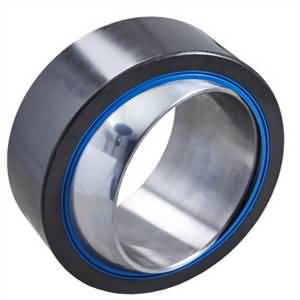
Jinan Maolei Bearing Co.,Ltd. is china plain bearing supplier for high performance spherical plai...
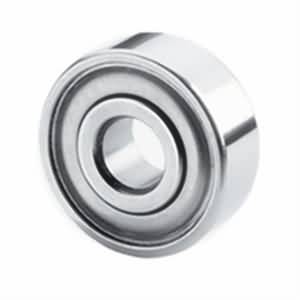
Miniature ss bearings have many advantages compared with ordinary bearings.Miniature ss bearings ...
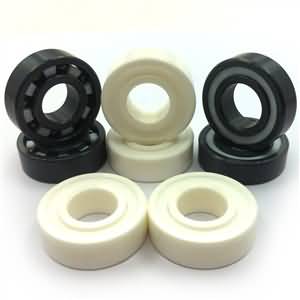
sealed ceramic bearings are more and more popular in recent years,they have many advantages compa...
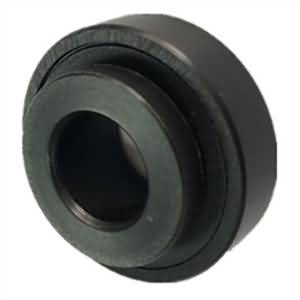
Plastic POM bearing may be usually divided into plastic rolling bearings and plastic slippy beari...
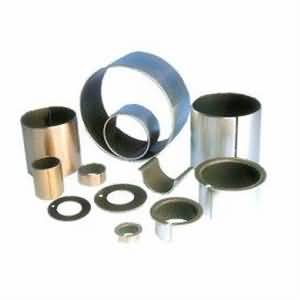
An anti friction bearing that operates below slippery friction.The anti friction bearing works sw...
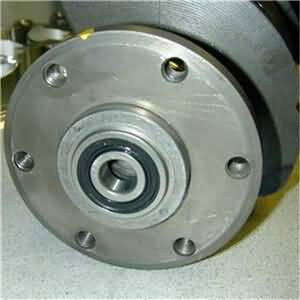
The clutch pilot bearing is that the 1st shaft guide bearing of the transmission.Between the engi...
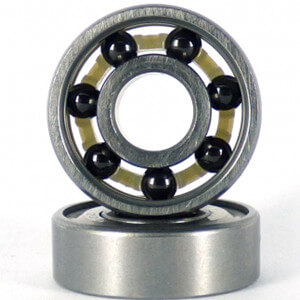
Many people do not know the secret of hybrid ceramic balls bearings A. the rolling bearing consis...
Nylon bearings material with smart mechanical strength and wear resistance , appropriate for the ...

 ntn@llhbearing.com