A sliding contact bearing is a bearing that operates under sliding friction. Sliding bearings operate smoothly, reliably, and quietly. Under liquid lubrication conditions, the sliding surfaces are separated by lubricating oil, preventing direct contact and significantly reducing friction loss and surface wear. The oil film also has a certain vibration damping capacity. However, starting friction resistance is relatively high. The part of the shaft supported by the bearing is called the journal, and the part that mates with the journal is called the bearing bush. The anti-friction material layer cast onto the inner surface of the bearing bush to improve its frictional properties is called the bearing liner. The materials of the bearing bush and bearing liner are collectively referred to as sliding bearing materials. Sliding bearings are generally used in low-speed, heavy-load conditions, or in operating parts where maintenance and lubrication are difficult.
Commonly used sliding contact bearing materials include bearing alloys (also called Babbitt metal or white alloys), wear-resistant cast iron, copper-based and aluminum-based alloys, powder metallurgy materials, plastics, rubber, hardwood and carbon-graphite, polytetrafluoroethylene (Teflon, PTFE), modified polyoxymethylene (POM), etc.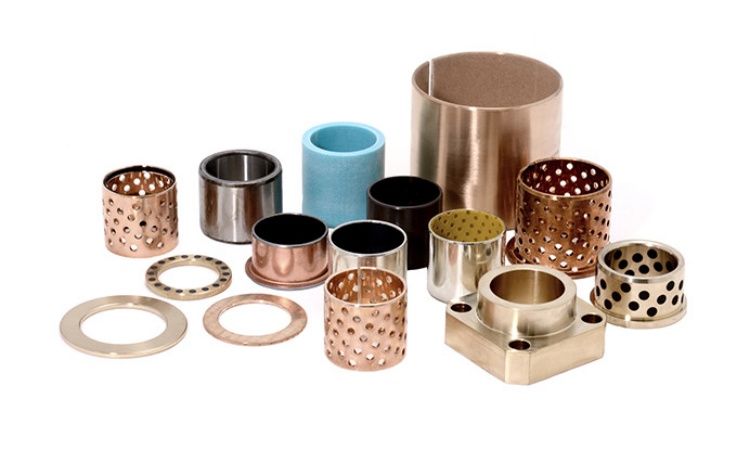
Sliding contact bearings absorb and transmit forces between relatively moving parts, maintaining their position and positioning accuracy. They also convert directional motion into rotational motion (e.g., in reciprocating piston engines).
Sliding contact bearings operate using sliding friction; the magnitude of this friction depends primarily on manufacturing precision, and the strength of the friction force depends mainly on the material of the bearing's sliding surface. Sliding bearings generally have self-lubricating properties on their working surfaces. They are classified into non-metallic and metallic sliding bearings based on their materials.
Non-metallic sliding contact bearings are primarily plastic bearings, typically made from high-performance engineering plastics. More specialized manufacturers often possess self-lubricating modification technology for engineering plastics, using fibers, special lubricants, glass beads, etc., to enhance their self-lubricating properties. These modified plastics are then injection molded into self-lubricating plastic bearings.
In the early 21st century, the most commonly used metal sliding contact bearing was the three-layer composite bearing. This type of bearing generally uses carbon steel plate as the base plate. A layer of spherical copper powder is first sintered onto the steel plate using sintering technology, and then a layer of PTFE lubricant of about 0.03mm is sintered on the copper powder layer. The main function of the middle layer of spherical copper powder is to enhance the bonding strength between the steel plate and PTFE. Of course, it also plays a certain role in load bearing and lubrication during operation.
 |
| If you need any brand bearings or any models of bearings, please contact me!
Contact: Grace |
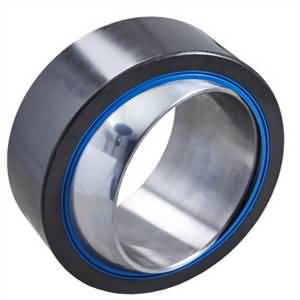
Jinan Maolei Bearing Co.,Ltd. is china plain bearing supplier for high performance spherical plai...
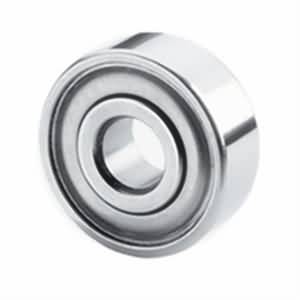
Miniature ss bearings have many advantages compared with ordinary bearings.Miniature ss bearings ...
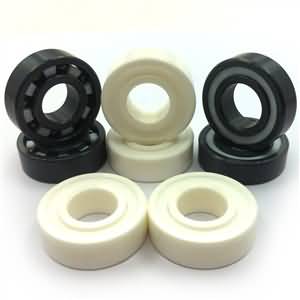
sealed ceramic bearings are more and more popular in recent years,they have many advantages compa...
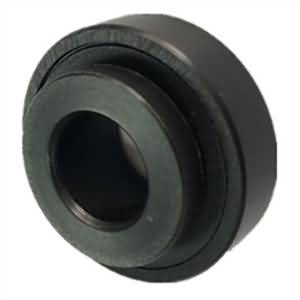
Plastic POM bearing may be usually divided into plastic rolling bearings and plastic slippy beari...
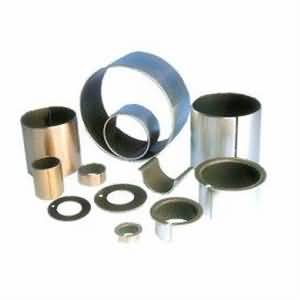
An anti friction bearing that operates below slippery friction.The anti friction bearing works sw...
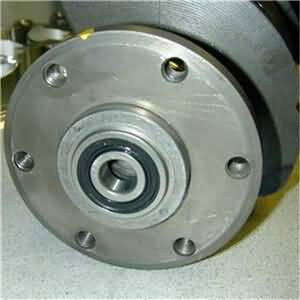
The clutch pilot bearing is that the 1st shaft guide bearing of the transmission.Between the engi...
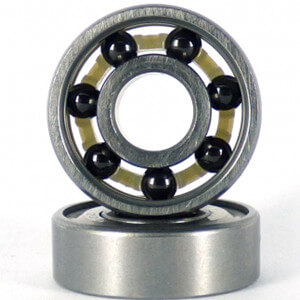
Many people do not know the secret of hybrid ceramic balls bearings A. the rolling bearing consis...
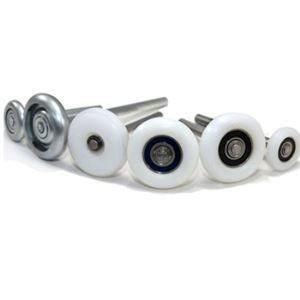
Nylon bearings material with smart mechanical strength and wear resistance , appropriate for the ...
 ntn@llhbearing.com