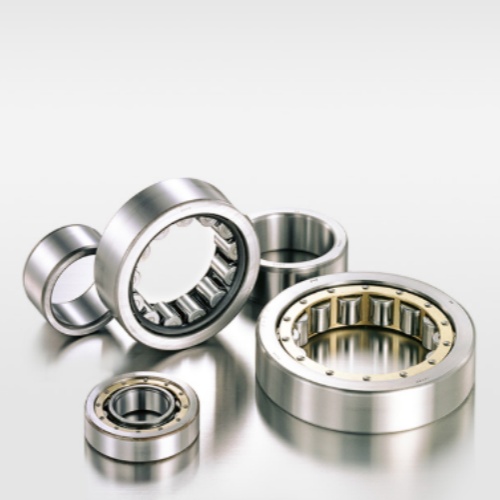
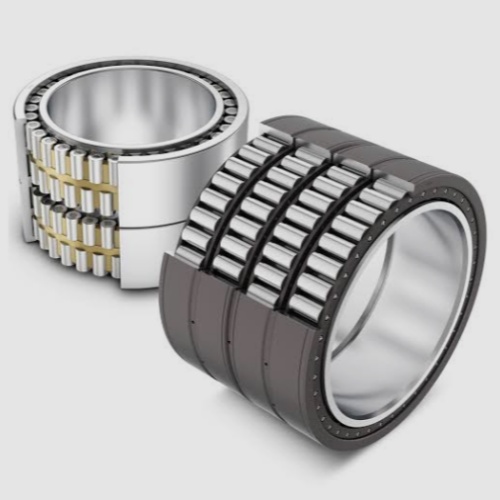
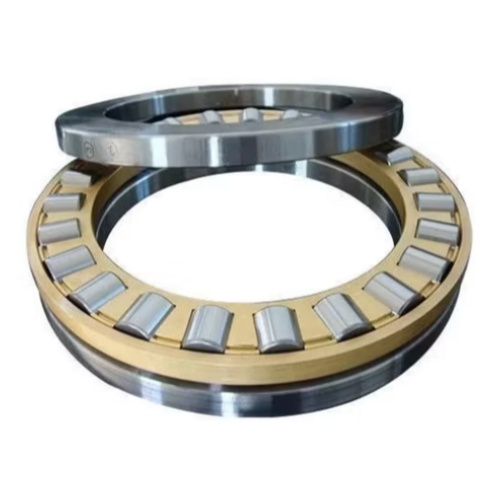
When an application demands greater load capacities or higher rigidity than a single row can provide, the following configurations are utilized:
- Double-Row Bearings (NN / NNU): These utilize a second row of rollers to offer exceptional radial rigidity and higher load capacity. They are primarily used in precision machine tool spindles.
- Four-Row Bearings (4R): Engineered to handle extremely heavy radial loads. They are almost exclusively found in heavy-industry machinery like rolling mills.
- Full Complement Bearing Cylindrical Roller Bearings (SL Type): These bearings do not have a cage, allowing the structural gap to be entirely filled with the maximum number of rollers. They offer the highest possible radial load capacity but operate at lower maximum speeds due to increased friction between rollers.
- Split Cylindrical Roller Bearings: The rings and cage are split into two halves. This allows for simple replacement in difficult-to-access bearing positions (like crankshafts) without dismantling adjacent machinery

- Cylindrical Roller Thrust Bearings (e.g., 811 / 812 Series): Differing from the radial bearings listed above, these are designed to handle severe axial (thrust) loads and impact loads. They offer high axial rigidity but must not be subjected to any radial force.

Common bearing cylindrical roller bearings cages:
1. Polyamide (Nylon) CagesMolded from glass-fiber reinforced polyamide (typically PA66), these are the most common cages for standard and high-capacity (E-design) industrial.
Common Suffixes: P, TVP, TN, T, ECP
2. Machined Brass CagesMachined from solid brass, these robust cages are guided either by the rolling elements (rollers) or by one of the bearing ring raceways
Common Suffixes: M, MA (outer ring guided), MB (inner ring guided), EM.
3. Pressed (Stamped) Steel Cages
Formed by pressing thin carbon-steel sheets into window-type or ribbon configurations
Common Suffixes: J, W.
4.Full Complement (No Cage):
Features zero cage structure, filling the bearing entirely with rollers to maximize radial load capacity at the expense of speed capabilities.